

Getting the Heat Right for Glass R&D
Most infrared lamps just give you a wall of uniform heat. That’s great for some things, but if you’re messing around with new glass compositions or tricky coatings, “uniform” is actually a problem. You don’t just need heat; you need to control exactly where that energy lands and how hard it hits.
Forget “Off-the-Shelf”
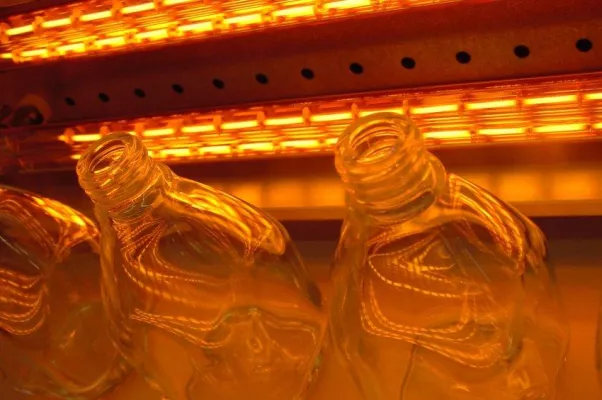
Usually, when people talk about “custom” lamps, they just mean changing the length or the wattage. We do things a bit differently. We can actually tweak the power density along the quartz tube. By changing how the filament is wound or playing with the reflector shapes, we can create specific hot spots or a smooth thermal glide. It means you can decide exactly how your glass moves from the heat of the fire to the cooling phase. No guessing.
The Balancing Act
Here’s the thing about high power density: it’s a superpower for speed. If you need to heat things up fast to stop unwanted crystallization, this is your best bet. But you have to be careful. If you cram too much energy into one tiny spot, you’re just asking for stress fractures. It’s a delicate balance. That’s why we let you tune the watts per centimeter to match your material’s thermal expansion. It’s about making the lamp fit the glass, not forcing the glass to survive the lamp.
The Catch
Total control over your annealing cycle is amazing, but it comes with a trade-off. These high-density setups put a lot more pressure on your power supplies and connectors. You can’t just plug these into any old circuit and hope for the best. Your controllers need to be dialed in to handle the specific load curves of a non-uniform lamp. If they aren’t, you’ll be burning through filaments way faster than you’d like. We build these for the engineers who are tired of fighting with standard gear. You get a heat source that actually understands the physics of your glass, so you can stop troubleshooting your equipment and start iterating on your material.