Getting the Heat Right for Glass R&D
Most heaters just give you a wall of uniform heat. But if you’re working on wine glass annealing or messing around with new glass materials, “uniform” is actually your enemy. The secret isn’t just about getting it hot—it’s aboutpower density. We’re talking about controlling exactly where those watts hit the glass. If you don’t, you’re looking at internal stress and those annoying optical distortions that ruin a piece.
Mapping the Heat
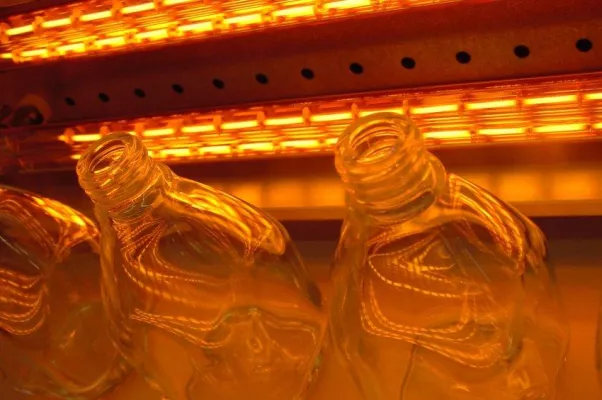
When we start designing a heater for your R&D, the size of the tube is just the basics. The real magic is in how we distribute the wattage. By playing with the filament winding or using modulated quartz envelopes, we can create specific thermal gradients. This is huge because it lets you hit the stem of a wine glass differently than the bowl. Need a concentrated spike of heat in the middle that tapers off at the ends? We just adjust the winding pitch. It keeps the glass from slumping and stops those dreaded cold spots that make everything crack the second it starts cooling down.
More Than Just a Different Length
We don’t just chop a tube to a different length and call it a day. We give you a lot of breathing room with voltage and wattage so the gear actually fits your existing power grid. Sure, a higher voltage setup means thinner wires and a cleaner look. But there’s a catch: if your insulation is getting old, you’re risking an arc-over. It’s all a balancing act between your floor space and your electrical overhead. We also use high-purity quartz. Why? Because the spectral output has to stay consistent. If you’re testing a brand new glass composition, even a tiny shift in wavelength can change how the material absorbs heat.
The Trade-offs
Here’s the thing: when you cram high power density into a small area, your heater supports are going to feel it. If you’re running these units at full tilt for long R&D cycles, you can’t skimp on the cooling. Your fans and heat sinks need to be beefy enough to handle the ambient heat rise. If the housing overheats, your lamp life plummets. We’ll provide the raw power, but your chassis has to be tough enough to take the beating.