
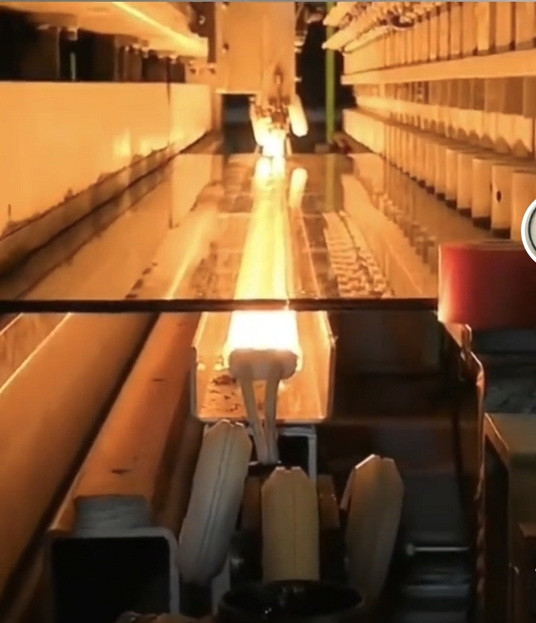
The Trick to Measuring Molten glass Temperature
If you’ve ever tried to measure molten glass with a standard infrared gun, you know the frustration. You point, you click, and the number on the screen is just… wrong. That’s because glass is a bit of a ghost when it comes to infrared radiation. It’s transparent. Most of the time, your sensor isn’t actually “seeing” the glass at all—it’s looking right through it and reading the temperature of the furnace wall behind it. Not exactly helpful when you’re trying to keep a melt consistent.
Tuning into the Right Frequency
So, how do we actually fix this? We stop trying to look at the glass as a whole and start looking at the additives. Most glass melts have specific oxides or dopants in them. These chemicals are great because they absorb energy at very specific wavelengths. Instead of using a wide-band sensor that tries to see everything, we build one that only looks for those specific “absorption peaks.” Think of it like tuning a radio. We block out all the static—the reflections, the background noise, the furnace walls—and tune the filter until we’re only hearing the signal from the additives.It’s the only way to get a reading based on the actual chemistry of your material.
The Trade-offs (Because nothing is magic)
Here is the catch: this isn’t a “one size fits all” tool. Since we’re tuning the sensor to your specific glass batch, it’s picky. If you decide to change your formula or tweak the concentration of your additives, the sensor will start to drift. You’ll get false readings, and you’ll have to recalibrate. Also, because we’re narrowing the window of light the sensor can see, we’re dealing with less overall signal. If you’re working with glass at very low temperatures, you might notice the response time is a bit slower than a cheap, wide-band sensor. It’s a trade-off, but accuracy beats speed every time in a heavy industrial line.
Setting it up on the Floor
When you’re wiring these into your control loop, one thing is non-negotiable:lock in your target distance. If the sensor shifts even a little bit, the focal point moves. That changes how much radiation hits the lens, and suddenly your data is skewed. We build these for the engineers who are tired of guessing. It’s a precision tool that lets you monitor your melt without ever having to touch the glass.